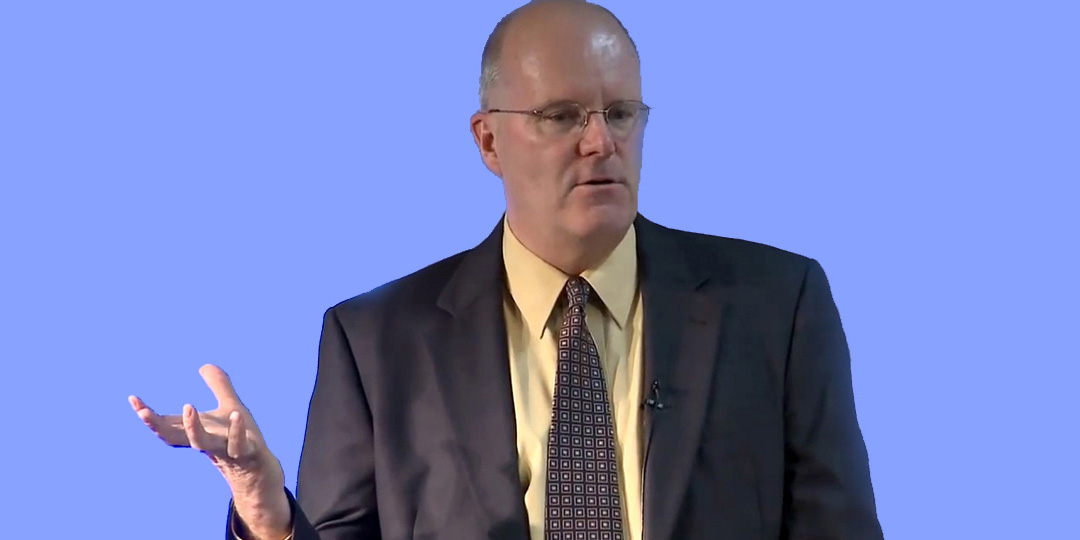
Mark Greenfield

Higher Education Web Consulting

March 15th, 2010

Perpetual Change

Next week I’ll be making a return visit to  the OmniUpdate Users Conference to deliver the opening keynote address. Here is the title and abstract:

Perpetual Change: What’s Next for the Web?

“Technology marches on. As Moore’s law collides with Metcalfe’s law, the web we see today and the devices we use to access it will become unrecognizable. Will the promise of the social web, the mobile web, the semantic web, and the real-time web be fully realized? Will the singularity become reality? What are the implications of ubiquitous computing? It may be time to rethink a few things. Join Mark Greenfield as he looks into the crystal ball at the long-term future of the web and the implications for higher education.”

=========================================================

My goal will be to take a look way out on the horizon to see what higher education web development might look like.  I’m not talking the 50,000 foot view here, I’m talking the 500,000 foot view. So while I have a few ideas of my own, I’m interested in your thoughts.  What does our future hold? What will the web look like? What kinds of things will higher ed web professional be working on?

And for my music friends, help me build my “Change” playlist which I’ll be using for background music before the start of my talk. (The title of the speech comes from a track from “The Yes Album”.)

February 18th, 2010

Higher Ed, Social Media, ROI - The Video

I’m looking for your help to create a video that showcases the value of social media in higher education. One of the most common questions that higher education administrators have regarding social media are costs and benefits.  They want to know why they should be investing resources on social media, especially in this challenging fiscal environment.  I firmly believe that social media provides a significant return on investment, but finding tangible examples can be a challenge.

One of my favorite videos about social media is Social Media ROI: socialmomics. This compelling video showcases numerous examples of social media ROI, primarily from the world of business. It was was created by Erik Qualman ( http://twitter.com/equalman).   He is also the author of socialnomics - how social media transforms the way we live and do business (More information is available at http://socialnomics.net). Since first seeing this video I’ve been thinking that it would be great if we could create a higher education version that provides real-world examples of how social media provides true value to colleges and universities.

So here is where you come in. I want to leverage the collective intelligence of my colleagues involved with social media in higher education to create a higher ed version of the video. With the help of Holly Rae Bemis-Schurtz, we have created a wiki to explain the project, collect examples, share ideas, and ultimately create and produce the video.  The wiki can be found at http://hesmroi.pbworks.com. After careful consideration, we have decided to make the wiki private as we collect data and only members will have access. We will approve membership requests as quickly as possible.

And finally, Erik Qualman has also offered to assist in creating the video (Thanks Erik!)

Help spread the word on Twitter by using the #hesmroi hashtag.  I look forward to working with you on this project.

February 11th, 2010

Join Together - UWEBD Hits 3,000

I am happy to announce that the uwebd social network (http://cuwebd.ning.com) hit a major milestone this month when the 3,000 member mark was reached.  Initially launched in December 2007, UWEBD has seen steady growth during the first two years and is currently growing by about 100 members per month.   The site has a global reach with members from over 50 countries.  Here are some additional stats:

  • 3,015 members (as of 2/11/10)
  • 1,104 discussions in the forums
  • 72 groups
  • Approximately 60,000 page views per month
  • Approximately 13,000 unique visitors per month

The goal of the uwebd site is to build a community of practice for everyone involved with higher education websites. It is intended to be a place where we can share experiences, ask questions, create community, and leverage the collective intelligence of our members to continually improve our skills.

I am always looking for ways to improve the site. Some current goals include:

  • Improving the search function. As the site has grown, the current search does a very poor job.  Improving the search will require getting into the source code and I will be looking for members with PHP experience to help with this task.  Please let me know if you are interested.
  • Continue to explore the relationship between forum discussions and group discussions.  It can be confusing on the proper location for a post (main forum or group), and searching for this information is a challenge. Feel free to share your thoughts on the forum posts vs group posts discussion.
  • Improved integration with other tools and sites where conversation about the issues facing higher ed web development are taking place, particularly Twitter and individual blogs. One of my goals has been to use the uwebd site to aggregate relevant conversations and content from across the web.  That being said, I think there is much more we could do.

I would like to extend my thanks to all our members, especially those whom have taken the time to contribute. I look forward to the continued growth and evolution of uwebd. I encourage everyone directly involved with higher ed websites to join our network.  And please send along any suggestions on how to improve the site.

February 1st, 2010

Book Review - socialnomics

I am a huge fan of the socialnomics videos and finally found the time this week to read the book.  socialnomics - how social media transforms the way we live and do business, written by Erik Qualman, is an excellent read and provides many great takeaways on why social media matters, and many of these takeaways are applicable to higher ed.  (More information is available at http://socialnomics.net/)

One of the key maxims in the book is that spending time on social media sites will actually increase your productivity.  While this may seem counter-intuitive to most, I agree with this assessment.  As I have said many times, Twitter is my most important professional development tool, and I depend heavily on my social graph to filter the signal from the noise.

Another key maxim of the book is that the winners in the world of social media are organizations that provide a great product or service (or in the case of higher ed, a great educational experience). In many ways social media is the proverbial canary in the coal mine.  At the end of the day, it’s not about the quality of the latest marketing campaign, it’s about the quality of the institution.  I would like to see more colleges and universities focus on improving the experience for their students, and less time worrying about the “brand”.

Qualman also talks about the importance of “One Message” which is also applicable to higher ed.  Every institution needs to understand what it stands for, be able to explain it in a few short words free of marketing hype, and understand how this differentiates the institution from competitors.  I’m not talking tag lines here, I’m talking about straight forward language that prospective students and their parents can understand.

Other key takeaways include:

  • What happens in Vegas stays on YouTube. There are no secrets.  We are living in a world of glass houses.
  • Speed wins - you need to be nimble and not afraid to make mistakes (a tough challenge for most higher ed institutions where we form committees to decide what committees we need).
  • Customers now have the ability to respond right at the point of frustration.
  • To effectively leverage the social graph, you need to make your content easily transferable. Any hurdle, no matter how small, can kill potential distribution (the end of walled gardens).
  • You need to do more than listen, you need to act.
  • Ineffective organizations view negative posts as a nuisance. Effective organizations relish critical online feedback.
  • The popular belief that people only take the time to post something bad is simply not true.

You can follow Erik Qualman on Twitter at http://twitter.com/equalman.  I am also moving forward with creating a higher ed version of his Social Media ROI video.  Details will be posted here in the next couple of days.  Stay tuned.

January 25th, 2010

Higher Ed, Social Media and the Law

Last Friday I watched a webcast from the University of Florida  sponsored by The Levin College of Law and University of Florida Strategic Communications Planning Committee called  Social Media: Promises, Pitfalls & Perils. In addition to watching the webcast, I participated on an impromptu backchannel. (here is a copy of the transcript from the backchannel.)

It was very interesting to listen to a panel of university legal experts weigh in on the legal ramifications of both personal and professional use of social media in higher education.  Overall, I felt there was too much emphasis on the risk and not enough said about the reward. While it was billed as a seminar on the safe and effective use of social media, one could have easily drawn the conclusion that safe and effective are mutually exclusive. I was frustrated with many things that were said.  Most of this frustration was not with the panel, but with current law. Too often common sense and the law are not on the same page.

Here are some additional thoughts I had while watching the webcast:

  • Understand your institution’s position on social media usage.  (I’m curious if anyone in higher ed has been dooced)
  • If you don’t have a social media policy to protect both employees and the institution, start working on one NOW.
  • Involve university counsel with social media policies.
  • Current federal law, state law, and university policies are painfully outdated. Social media will require a whole new paradigm.
  • When you combine how fast the web changes with how slow the legal system moves, this will get worse before it gets better.

I recommend that everyone watch the recording of the webcast.  Be forewarned that it is 2 hours long, but in the long run it will be time well spent. I’ll be interested to hear your thoughts.

This is an important topic and the conversation must continue.  I will have a big announcement in this regard coming shortly.  Stay tuned.

January 21st, 2010

Why is Higher Ed the Toughest Gig in all the Web?

One of my personal goals for 2010 is to expand my speaking engagements beyond higher ed conferences. While I value these conferences and will continue to attend  them, there is a lot to be learned beyond the walls of the ivory tower.

In May, I will be speaking at the J. Boye Conference. I’m working on themes for my presentation and thought it might be interesting to explore why, IMHO, working in higher education is the most challenging sector for web development and share lessons learned that are applicable to everyone.

I’m looking to tap the collective intelligence of the higher ed web community. What do you think makes higher ed such a challenge?  What are the lessons learned?

FYI - the conference is scheduled for Philadelphia on May 4-6, 2010. Registration is open and there is a 40% discount for anyone in higher ed.  Be advised that the conference venue allows no more than 200 delegates, so first come, first served. Also, they are looking for additional speakers in the higher education track.  Let me know if you are interested. More Information is available at http://www.jboye.com/conferences/philadelphia10. Hope to see you there.